


Keyword research is the foundation of successful SEO, content marketing, and paid advertising. If you target the wrong keywords, even the best content won’t rank. That’s why professionals rely on powerful SEO tools, and SEMrush is one of the most trusted platforms for keyword research today.
In this step-by-step guide, you’ll learn how to use SEMrush for keyword research, even if you’re a complete beginner. By the end, you’ll know how to find profitable keywords for SEO, content marketing, and Google Ads, and how to access SEMrush affordably starting from $5/month.
What Is Keyword Research and Why Does It Matter
Keyword research is the process of identifying words and phrases that people type into search engines, such as Google. These keywords help you:
- Understand what your audience is searching for
- Create content that matches search intent
- Rank higher on Google
- Drive targeted traffic that converts
Without proper keyword research, SEO becomes guesswork.

Why Use SEMrush for Keyword Research?
There are many SEO tools for keyword research, but SEMrush stands out because it combines:
- Massive keyword databases
- Accurate search volume data
- Keyword difficulty metrics
- Competitor analysis
- Content and PPC insights
Whether you’re doing SEO, content marketing, or Google Ads, SEMrush gives you actionable data—not just keyword lists.
SEMrush Dashboard Overview (For Beginners)
After logging into SEMrush, you’ll see a dashboard with multiple tools. For keyword research, you’ll mainly use:
- Keyword Overview
- Keyword Magic Tool
- Organic Research
- Keyword Gap
Don’t worry—you don’t need everything at once. Let’s go step by step.
Step 1: Use SEMrush Keyword Overview Tool

The Keyword Overview tool is the fastest way to analyze any keyword.
How to use it:
- Go to Keyword Overview
- Enter your main keyword
Example: how to use semrush for keyword research - Select your target country
- Click Search
Key metrics you should understand:
- Search Volume – Average monthly searches
- Keyword Difficulty (KD%) – How hard it is to rank
- CPC – Cost per click (useful for ads)
- Search Intent – Informational, Commercial, Transactional
👉 Tip: Choose keywords with medium volume + low to medium difficulty, especially for new websites.
Step 2: Find Hundreds of Ideas with Keyword Magic Tool
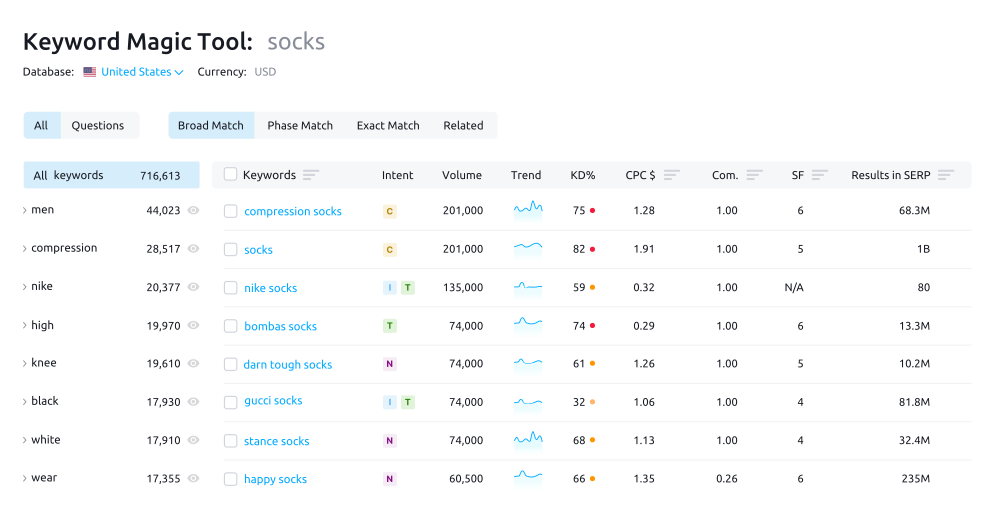

The Keyword Magic Tool is where SEMrush really shines.
How to use SEMrush Keyword Magic Tool:
- Open Keyword Magic Tool
- Enter a seed keyword
Example: keyword research - Choose your country
- Click Search
SEMrush will generate thousands of related keywords.
Filters you must use:
- KD%: Filter below 40 (for beginners)
- Volume: Set a minimum (e.g., 100)
- Intent: Focus on Informational or Commercial
Example keyword ideas:
- how to do keyword research in semrush
- how to use semrush for beginners
- semrush how to do keyword research
These are perfect for blog posts and tutorials.
Step 3: Find Long-Tail Keywords (Low Competition Gold)
Long-tail keywords are longer phrases with clear intent and lower competition.
Why long-tail keywords matter:
- Easier to rank
- Higher conversion rate
- Perfect for content marketing
How to find them in SEMrush:
- Use Questions tab in Keyword Magic Tool
- Sort by KD% (low to high)
- Look for keywords with 4–6 words
Example:
- how to use semrush to improve seo
- how to use semrush for content marketing
These keywords are ideal for in-depth guides like this one.
Step 4: Analyze Competitor Keywords (Using SEMrush for SEO)


One of the best ways of using SEMrush for SEO is spying on competitors.
How to do it:
- Go to Organic Research
- Enter a competitor’s domain
- Open the Positions tab
You’ll see:
- Keywords they rank for
- Traffic estimates
- Ranking positions
👉 Find keywords where competitors rank on page 2–3. These are great opportunities.
Step 5: Use Keyword Gap Tool to Beat Competitors
The Keyword Gap tool compares multiple websites.
How it works:
- Open Keyword Gap
- Enter your domain + competitors
- Choose Organic keywords
- Select Missing or Weak keywords
This shows keywords your competitors rank for—but you don’t.
Perfect for building a content plan.
Step 6: Keyword Research for Content Marketing
If you’re a blogger or content marketer, SEMrush helps you map keywords to content.
Best practices:
- One primary keyword per page
- 5–10 secondary keywords
- Match search intent
- Use keywords naturally in:
- H1, H2
- Introduction
- Meta description
- Conclusion
Using SEMrush for content marketing ensures your content is built on real search demand—not assumptions.
Step 7: SEMrush Keyword Research for Google Ads


SEMrush isn’t just for SEO—it’s powerful for PPC too.
How to find Google Ads keywords:
- Use Keyword Overview
- Check CPC and Competitive Density
- Go to Advertising Research
- Analyze competitor ads
High CPC + commercial intent = profitable ad keywords.
Step 8: How to Choose the Right Keywords (Pro Framework)
Before finalizing keywords, ask:
- Is search intent clear?
- Can I realistically rank?
- Does this keyword match my business goal?
Ideal keyword formula:
Medium volume + low difficulty + clear intent
SEMrush gives all three in one place.
Common Mistakes Beginners Make with SEMrush
- Targeting only high-volume keywords
- Ignoring keyword difficulty
- Not checking search intent
- Using too many keywords on one page
Avoid these mistakes and SEMrush becomes incredibly powerful.
SEMrush Pricing Problem (And the Smart Alternative)
SEMrush is one of the best SEO tools—but its official pricing can be expensive for:
- Beginners
- Freelancers
- Small agencies
- Bloggers
That’s why many professionals look for affordable access options.
Affordable way to use SEMrush
You can access SEMrush through trusted shared platforms starting from $5/month, making it ideal for:
- Keyword research
- SEO audits
- Content planning
- Competitor analysis
👉 This is especially useful if you’re just starting or don’t need a full agency plan.
Disclaimer
This content is for educational and research purposes only. Tool access methods may vary based on platform policies.
Frequently Asked Questions (FAQ)
Is SEMrush good for beginners?
Yes. SEMrush is beginner-friendly once you understand the core tools like Keyword Overview and Keyword Magic Tool.
Can I do keyword research in SEMrush for free?
SEMrush offers limited free searches, but serious keyword research requires full access.
Is SEMrush better than other SEO tools?
SEMrush is one of the most complete SEO tools, especially for keyword research and competitor analysis.
How often should I do keyword research?
Whenever you create new content, launch a campaign, or notice ranking drops.
Final Thoughts
Learning how to use SEMrush for keyword research can completely change your SEO results. With the right keywords, you stop guessing and start ranking strategically.
If SEMrush pricing feels like a barrier, starting with an affordable shared access option can help you learn, test, and grow—without heavy upfront costs.
👉 Start with smart keyword research. That’s where real SEO success begins.